
A virus that "will target children"
A running theme of “Superflu”, the SPARS pandemic 2025-2028 and the UK government's recent Exercise Pegasus

This is alas hardly a Christmassy post, but it is somewhat seasonal.
Like stories such as this one:

Such headlines are of course hardly new:

“Superflu”
In 2025 though, there has been a running theme over recent weeks. Here are some headlines… all from 11th December…
According to the Independent, “top NHS chief warns public for ‘tidal wave’ of flu”, with “the new H3N2 flu strain [being] different to the strain that this year’s vaccines were designed to protect against”:

The Sun has the headline: “Patients treated in CUPBOARDS in NHS ‘superflu’ chaos as docs warn ‘last chance’ to get vaccine before H3N2 peak”:
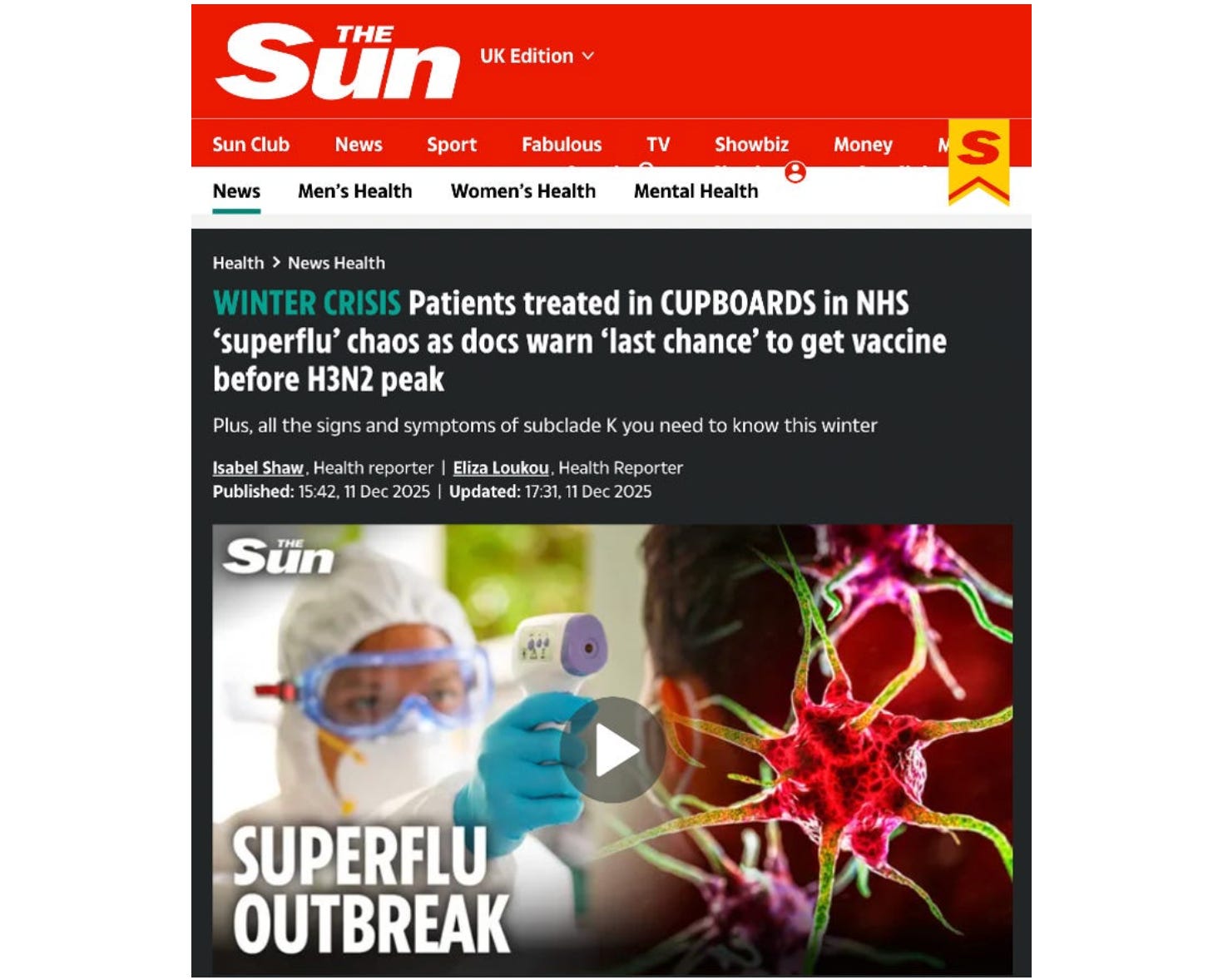
I guess The Sun’s “H3N2 peak” refers to the new H3N2 flu strain that is, to quote the Independent, “different to the strain that this year’s vaccines were designed to protect against”…?
This article in The Mirror has a similar theme:

I am reminded of Bob Moran’s covid era Stab Vest cartoon:

Vaccines feature prominently on this BBC webpage, also from 11th December:
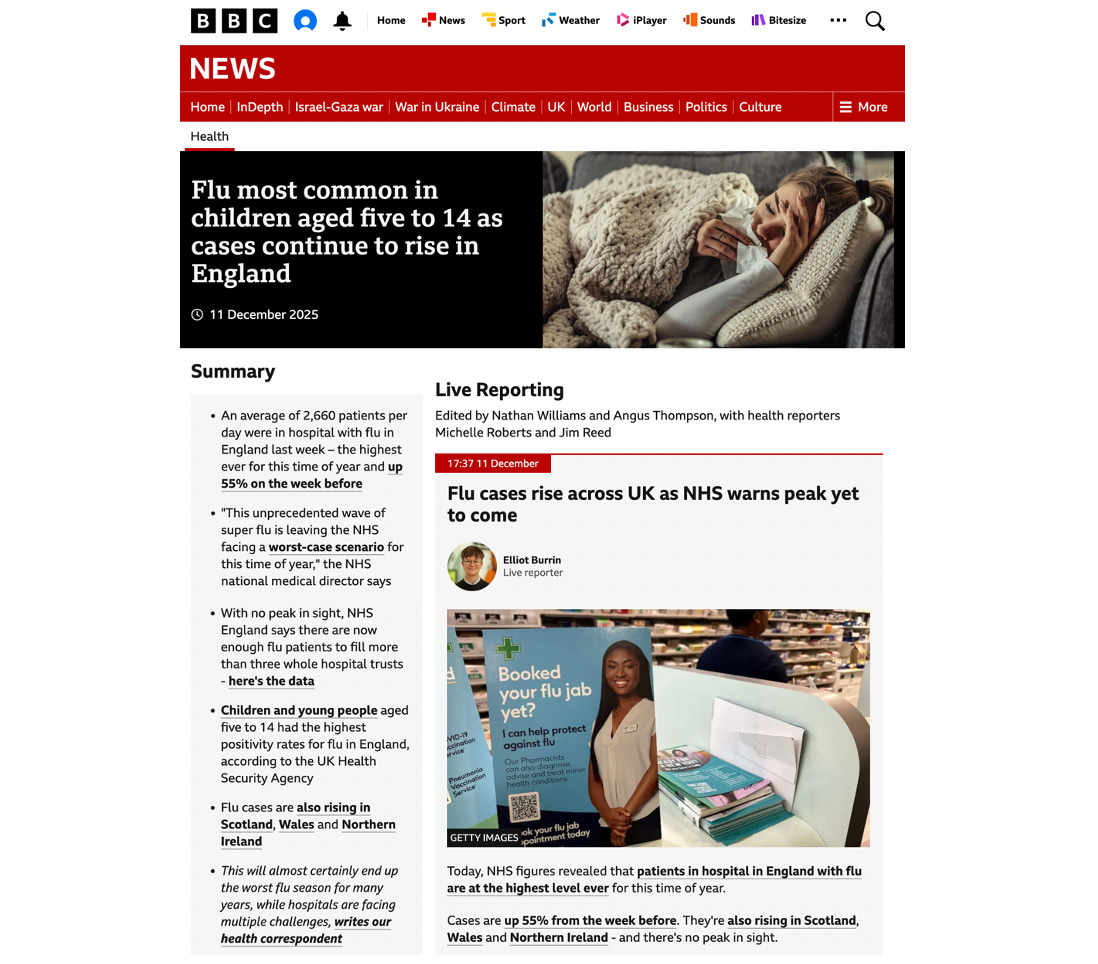
I note the picture at the bottom of the snapshot, and the words “Booked your flu jab yet?” and “I can help protect against flu”.
I am reminded of the “Superflu” section of the December Updates post, and particularly of the fact that when I write to the local vaccination team asking for evidence that flu vaccines do more good than harm, I get no reply. And in relation to “I can help protect against flu”, I cannot help but recall this fairly recent article in The Times reporting that “the number of NHS staff getting the seasonal flu vaccine over winter has crashed to 37.5% — its lowest level in almost 15 years”.
As to the BBC’s Summary bullet points:
“2,660 patients per day” — to put things in perspective, given that there are around 700 NHS hospitals in England,1 that is an average of three or four people per NHS hospital
“highest ever for this time of year” — to what extent is this because the flu season has begun earlier than usual, as it did in Australia?
“no peak in sight” — hmm… below is a chart from a UK government report dated 11th December, the same day that the above articles appeared:2
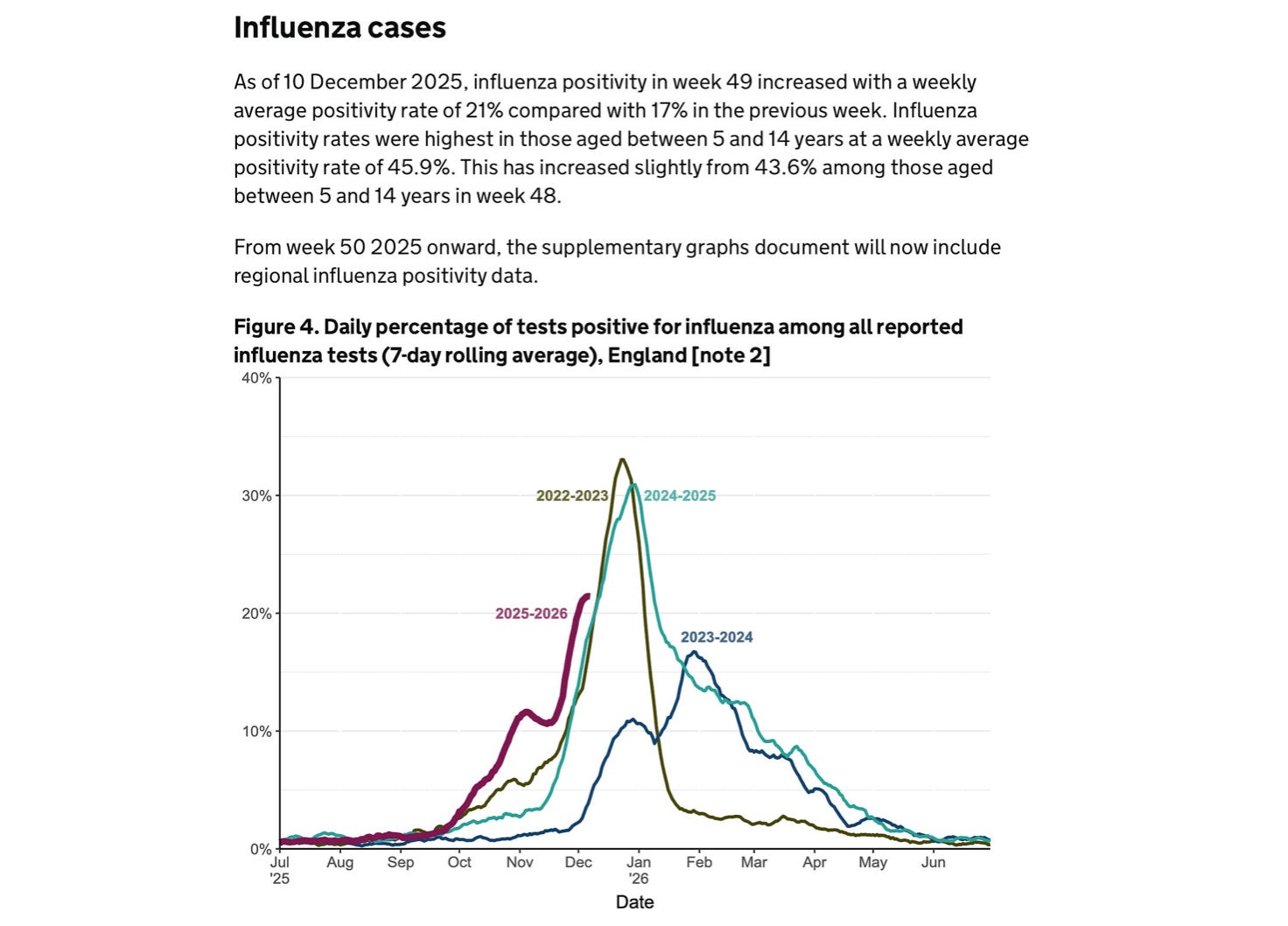
“the highest positivity rates for flu in England” — how meaningful is that statement? What sort of testing is being conducted? Who is being tested? What is the false positive rate? And how does test positivity relate to actual symptoms?3
“Flu cases are also rising in Scotland, Wales and Northern Ireland” — okay, but how newsworthy is a December rise in flu cases anywhere in the UK?
“This will almost certainly end up the worst flu season for many years” — well, below is the 18th December chart analogous to that above:
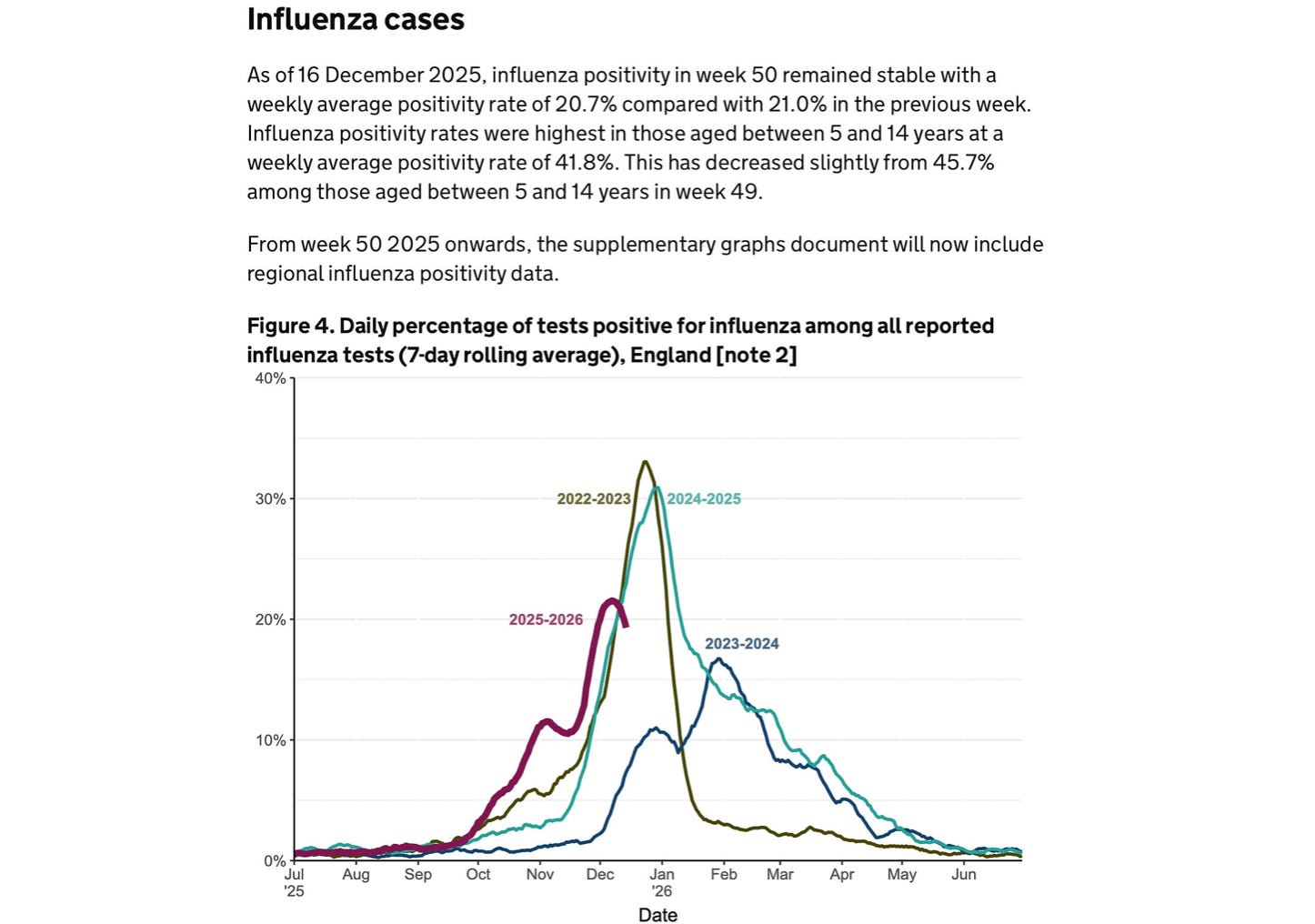
There may of course be another peak, as there was in 2023-2024, but I would be intrigued to know why the BBC health correspondent thinks that 2025-2026 “will almost certainly end up the worst flu season for many years”. “Projections” perhaps? Based on computer modelling…?
But as we have learned from the past few years, real world data — as distinct from fantasy computer modelling — does not necessarily have much impact on media fearmongering.
And so perhaps it was not entirely surprising that, almost a week later, this headline in The Sun stated: “New flu alert as ‘B’ strain ‘will target children’ in New Year…”:

I am reminded of one of the Summary points from the previous BBC article:
Children and young people aged five to 14 had the highest positivity rates for flu in England, according to the UK Health Security Agency
It is important to think about what might be going on here. The powers-that-be are surely aware that it is widely acknowledged that covid lockdowns were very damaging to children, and that a repeat of such a policy “to protect Granny” would be unacceptable to many. But if there were a virus that we were told was targeting children…?
Stepping back, there is rather more by way of context for the recent media fearmongering.
The SPARS pandemic 2025-2028
In February of this year, I posted this article…

…which I recommend reading (or even re-reading), not least in the context of the previous section.
As I re-read what I wrote, I found this paragraph particularly striking:
Two additional features of the SPARS virus are also mentioned: an extended incubation period (seven to ten days) compared to its latent period (four to five days), meaning that infected persons could spread the virus for up to nearly a week before showing symptoms; and higher morbidity and mortality in children than adults. [How many of the known coronaviruses actually have higher morbidity and mortality in children?!]
NB the text is my abridged version of the SPARS pandemic document, and the words italicised in square brackets are my additional comment.
What a coincidence. The hypothetical 2025-2028 scenario features a virus with higher morbidity and mortality in children than adults. And here we are, at the end of 2025, with a headline in one of Britain’s most popular tabloids stating that a particular strain of a virus will target children.
There is additional context in the SPARS article linked above, along with some fairly obvious questions. But that is not all, for there has recently been another pandemic preparedness exercise in the UK.
Exercise Pegasus
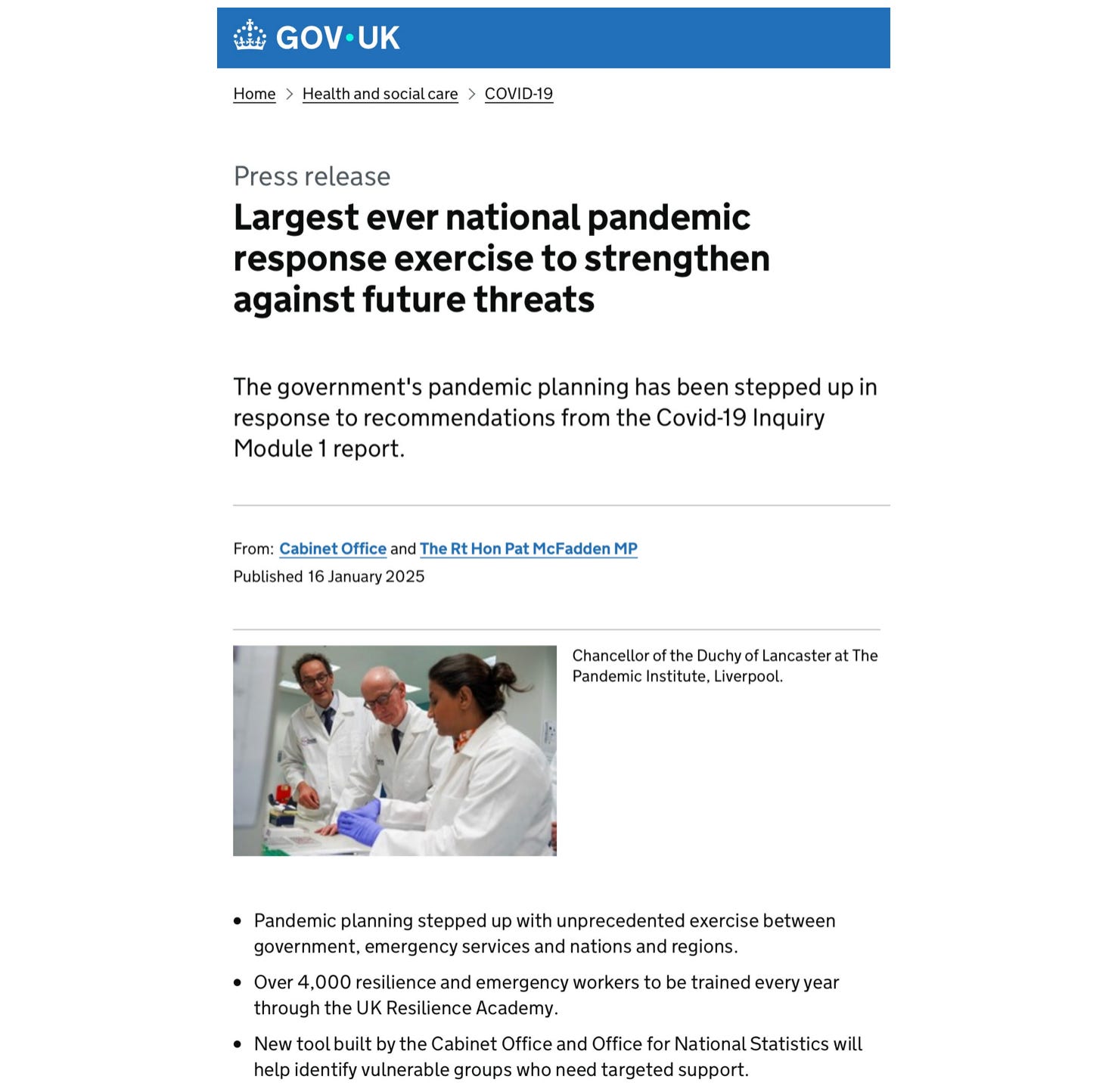
In January, a UK government press release announced the “largest ever national pandemic response exercise”:
In July, NHS England announced Exercise Pegasus:


Note its key purpose:
…to simulate a realistic pandemic scenario
In September, there was confirmation in Parliament of Exercise Pegasus:

I am today confirming that, on 18 September, Exercise Pegasus, the national tier 1 pandemic preparedness exercise set to assess the UK’s ability to respond to a pandemic, will commence.
A pandemic remains the top risk of the UK’s national risk register, and experts are clear that it is a case of when, not if, the UK will experience another pandemic.
And in November, there was this Telegraph Exclusive:

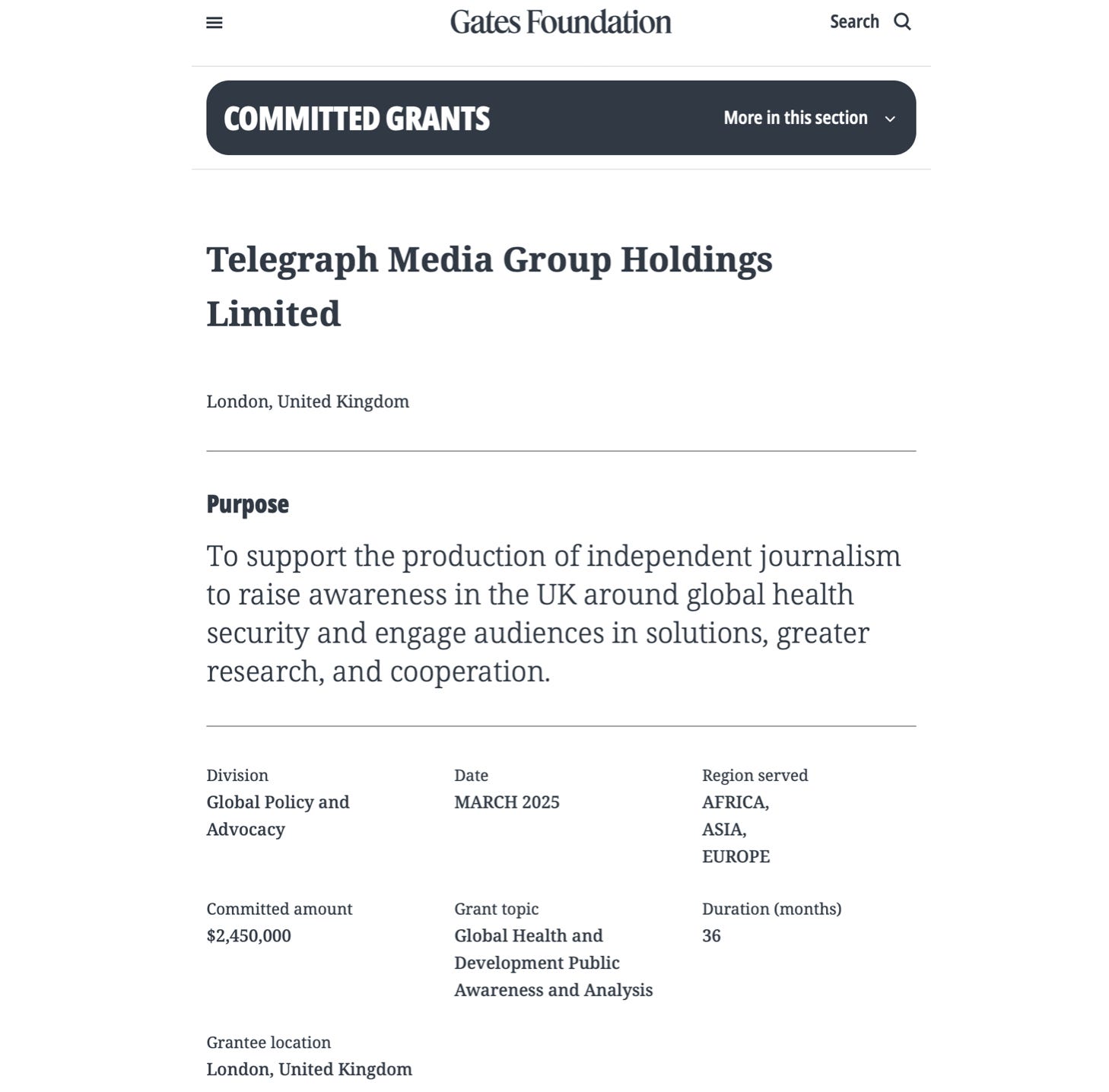
The article, which is not behind a paywall, comes courtesy of The Telegraph’s Global Health team, which apparently received $2,450,000 from the Gates Foundation in March:
It begins:
Schools across the UK were locked down this autumn as part of a state drill to tackle the threat of a new deadly virus.
And there is a prominent running theme…
The subheading reads (emphasis added):
Exercise Pegasus imagined a virus deadly to children spreading around the world from an island in southeast Asia
And in the main article, we read that:
Unlike Covid-19, which disproportionately affected older age groups, the new virus was most lethal in the young. The virus, “EV-D68”, was said to cause respiratory failure, brain swelling and — in rare cases — paralysis in infants, children and teenagers.
We are then told that other features of the Pegasus scenario included:
The spread of the imagined virus resulted in travel restrictions, school and business closures and mask wearing in the UK and around the world.
And:
Ministers involved in the drill [having] to “wargame” dealing with fictional street protests over social distancing…
The Telegraph Exclusive continues:
News of the drill comes a week after the second module of the Covid Inquiry found the UK did “too little, too late” to contain and mitigate Covid-19 in the early part of 2020 and prevent a series of ruinous national lockdowns.
Closing schools “brought ordinary childhood to a halt” and the decision to shut them had a “profound consequence” on children, it said.
But what if a virus “was said to cause respiratory failure, brain swelling and — in rare cases — paralysis in infants, children and teenagers”…?
The only heading within the article is ‘A realistic pandemic scenario’, which alludes to Exercise Pegasus’ key purpose according to the July NHS briefing document mentioned earlier.
And the realistic scenario is based on a real virus:
The real EV-D68 is a respiratory virus first isolated in California in 1962, which has gained global traction. As well as respiratory disease and meningitis, it can cause a polio-like paralysis in children known as acute flaccid paralysis.
Here is a related article from Public Health England:

Meningitis is also mentioned in this statement in Parliament in early November:

The Telegraph Exclusive quotes Sir Peter Horby, Professor of Emerging Infections and Global Health at the University of Oxford and the Director of the Pandemic Sciences Institute:
“The choice of an enterovirus is a good choice because it is a real possibility with real risks but is different from what we have seen before…”
I am reminded of this recent Daily Mail article…
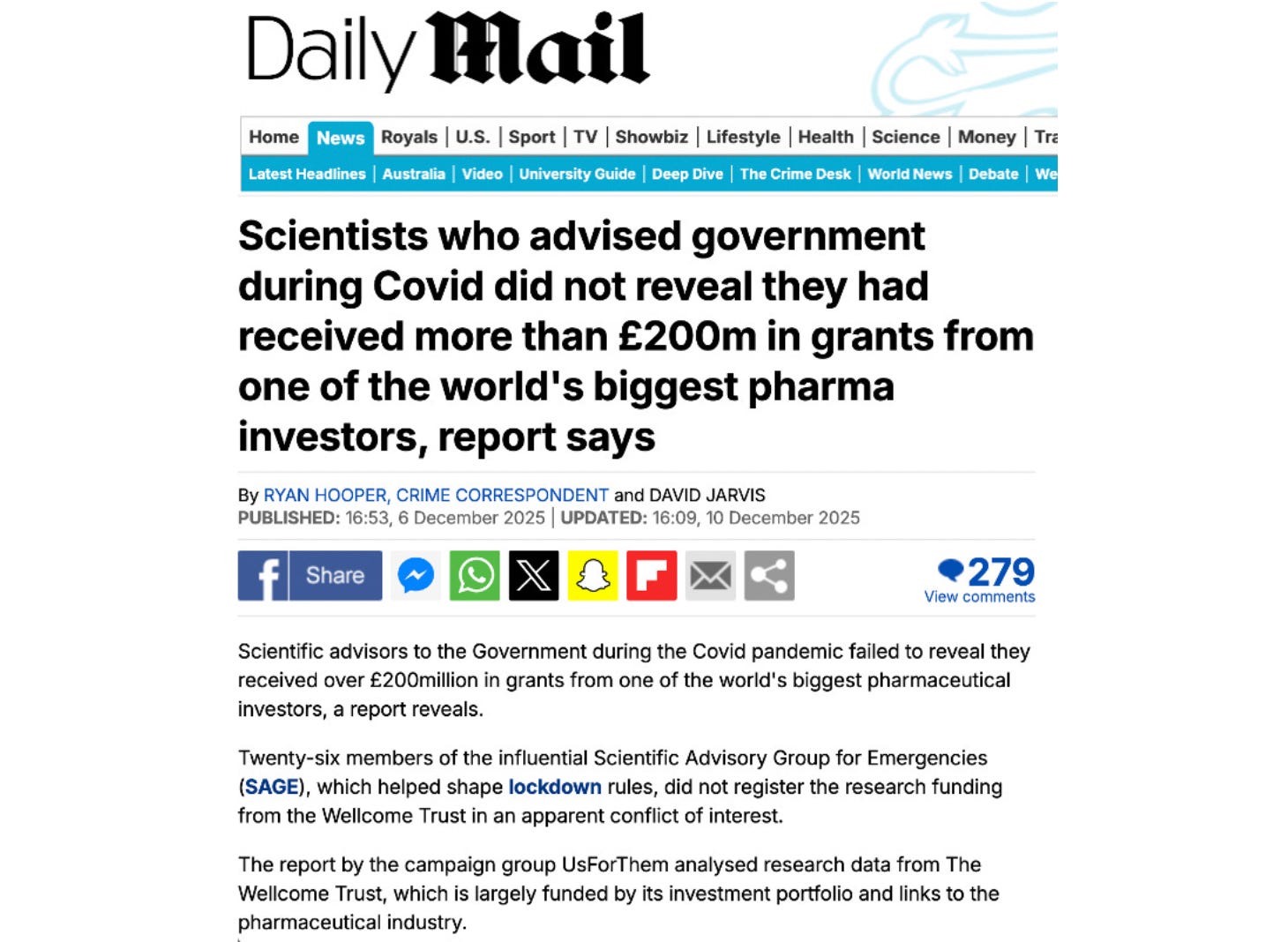
…which was written by the paper’s crime correspondent, and appeared more than five years after an independent researcher had put together this piece:

In 2020, Horby was one of the many members of SAGE, and featured here in Dr Zoë Harcombe’s article with a double conflict of interest:
2) 12 out of 20 work for/have received funding from organisations involved in the Covid-19 vaccine. Those 12 don’t include Vallance with personal pharmaceutical conflicts or Whitty with historical funding from the Gates foundation.
Three work for Imperial College and two work for Oxford University — the two forerunners in the Covid-19 vaccine race in the UK — each receiving millions of pounds from government(s) (Ref xiii).
Three more work for the London School of Hygiene and Tropical Medicine with its own vaccine centre (working on Covid-19 among other vaccines). One works for UCL, which is working with Imperial on its vaccine.
Two work for Wellcome/the Wellcome Sanger Institute and one has received funding from the latter.
Two members have double conflicts — Peter Horby with Oxford University and Wellcome and Wendy Barclay with Imperial College and Wellcome.
He was knighted in the Queen’s Birthday Honours for 2021.
At one stage he was also the chair of NERVTAG, the UK’s New and Emerging Respiratory Virus Threats Advisory Group. And in 2022, he was featured in this Telegraph article from the paper’s Deputy Global Health Editor (the 2025 Gates Global Health money to the Telegraph Group was not the first):
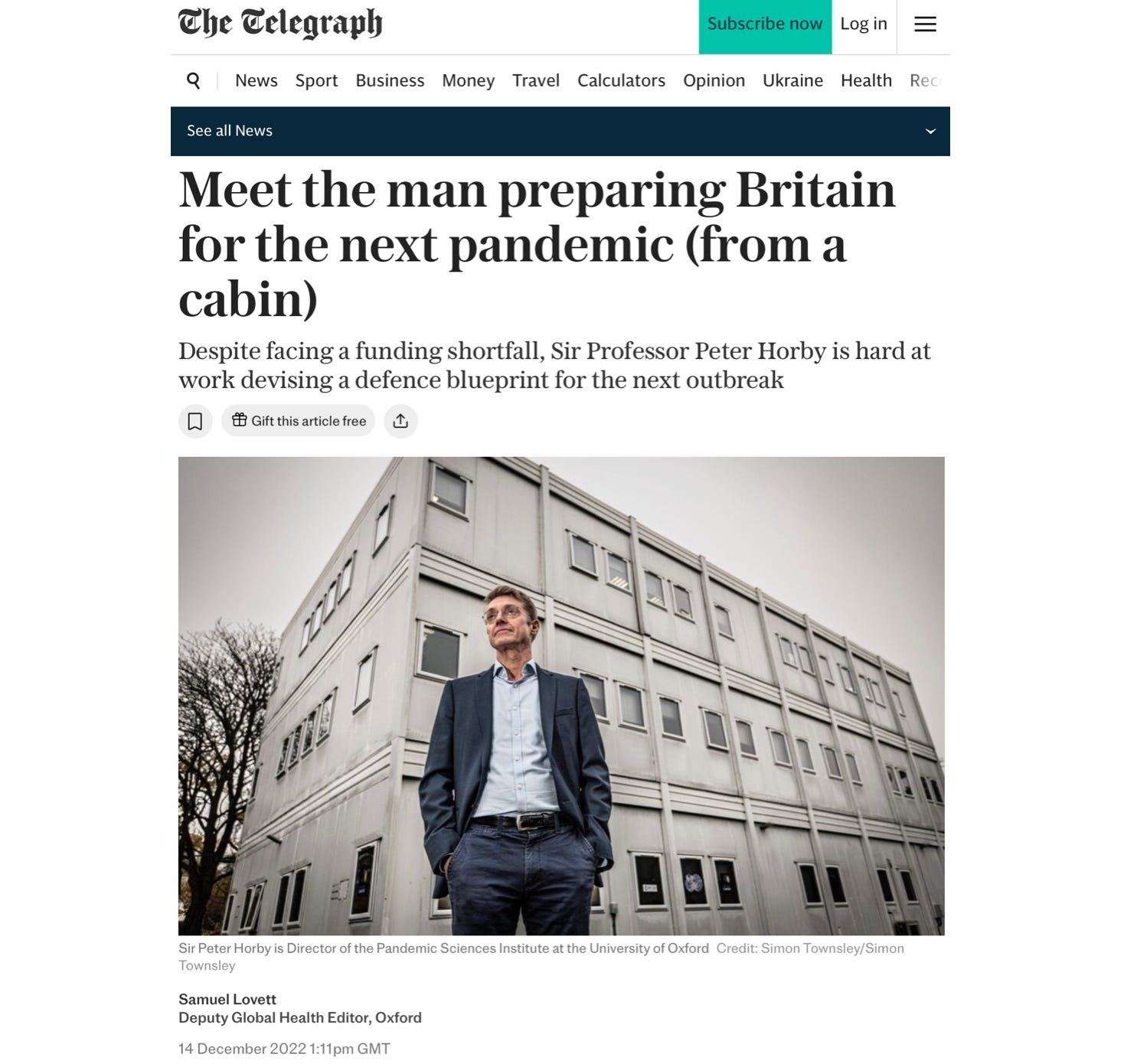
“Sir Professor Peter Horby”… who was reportedly “keen to bottle up the brilliance of the team behind the Oxford-AstraZeneca jab and apply it to the development of new vaccines”…
Returning to the recent Telegraph article on Exercise Pegasus:
In Phase 1… participants were told an outbreak of a novel enterovirus had occurred on the fictional Island of “Musiyana” in southeast Asia and that it had already spread to Malaysia and Singapore.
The outbreak followed a local “food festival”, a child had died on 17 September and the virus was “considered to have pandemic potential”.
It is not clear if travel restrictions were recommended by UK ministers at this point in an attempt to prevent the virus getting to Britain, but the Telegraph understands a range of travel restrictions were in place by the end of the exercise.
Then:
In Phase 2… the World Health Organization (WHO) formally declared a pandemic, schools were closed and hospitals started to come under pressure. Protests over social distancing also broke out.
COBRA was told that, like Covid, the virus can be spread through respiratory aerosols and droplets and that “asymptomatic spread cannot be excluded”.
And:
In Phase 3, a national lockdown was declared and non-essential businesses ordered to close. There were also fears that the virus — thought to be carried in pigs — could also cause food shortages if UK herds became infected.
The article then notes that:
The first part of the Covid Inquiry found the UK’s pandemic plan ahead of that outbreak was flawed in that it failed to consider preventing a novel virus sweeping across Britain in the first place.
As if it were possible to prevent an airborne virus…
Towards the end of the piece, we read:
It is not clear what measures ministers ordered during the Exercise Pegasus to try and prevent the virus getting to the UK, but the exercise was designed to test government decision making around “containment” as well as “mitigation”, say government documents.
Closing schools during the Covid-19 lockdowns “brought ordinary childhood to a halt,” the second part of the Covid Inquiry found. No plans had been made ahead of the pandemic that would have allowed for a quick switch to remote learning.
“The decisions to close schools and early years provision to most children and to implement a lockdown were steps taken to protect the adult population. They brought ordinary childhood to a halt,” concluded the Inquiry.
And that, in case we missed it earlier:
In Exercise Pegasus, the imagined virus was most lethal to children…
Which:
…[presented] ministers with a different challenge around schools.
Hence, presumably, the opening paragraph and the headline:
Schools locked down again in secret pandemic drillsMake of that — and indeed the recent “Superflu” fearmongering — what you will.
Related:


Unexpected Turns homepage
The most-read articles can be found here
This Statista article puts the total number of hospitals (NHS and private) in the UK at 1,850 in 2023
I am reminded of this 2007 article from The New York Times:

For months, nearly everyone involved thought the medical center had had a huge whooping cough outbreak, with extensive ramifications. Nearly 1,000 health care workers at the hospital in Lebanon, N.H., were given a preliminary test and furloughed from work until their results were in; 142 people, including Dr. Herndon, were told they appeared to have the disease; and thousands were given antibiotics and a vaccine for protection. Hospital beds were taken out of commission, including some in intensive care.
Then, about eight months later, health care workers were dumbfounded to receive an e- mail message from the hospital administration informing them that the whole thing was a false alarm.