
One chart to rule them all?
The shocking reality of how the number of deaths each week in England and Wales in early 2020 compared with the average for the previous 5 years

On the sixth anniversary of the announcement of covid lockdowns, this is a short post featuring a single chart that shows how the number of deaths each week in England and Wales in early 2020 compared with the average for the previous 5 years.
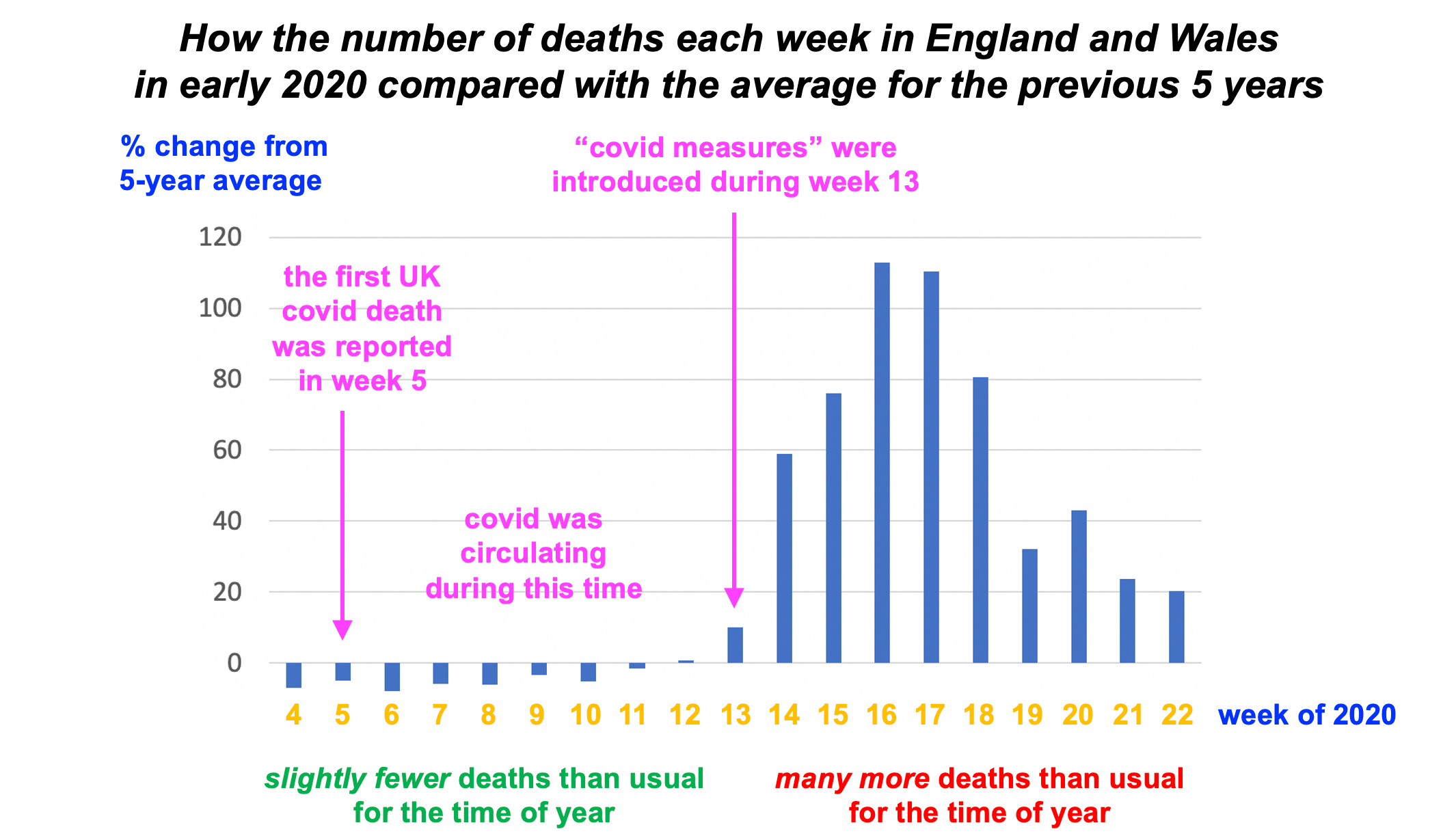
The numbers on which this chart is based are from the UK government’s Office for National Statistics (ONS). Further details and context can be found e.g. here.
Before the “covid measures” were introduced
According to newspaper reports, covid was in circulation from late January
Life carried on essentially as usual through February and into March
The UK government announced on 19th March — four days before we were ordered to stay at home — that “COVID-19 is no longer considered to be [a high consequence infectious disease] in the UK”
There were slightly fewer deaths than usual for the time of year
After the “covid measures” were introduced
Covid was still in circulation, as it had been since at least January
People were terrified by the authorities and the media in the context of “the perceived level of personal threat [needing] to be increased”
People were told essentially, “Don’t come into hospital if you can help it”
“Covid guidelines”1 were adopted, including:2
Do Not Resuscitate orders
the administration of end-of-life drugs such as midazolam
There were many more deaths than usual for the time of year
Make of that what you will.
Related:


Unexpected Turns homepage
The most-read articles can be found here
Such as the document NG163, COVID-19 rapid guideline: managing symptoms (including at the end of life) in the community, which is no longer available on the NICE website, but can be viewed e.g. here (archived version) or here (pdf, c/o this related article)
For those “testing positive for covid” with a fraudulently-conducted test where, in the words of its Nobel Prize-winning inventor who died unexpectedly in August 2019, “if you do it well, you can find almost anything in anybody”