
Updates (Jan 2026)
Streisand again; yet another personal story; ambulance calls; sex-selective abortions; Talla context; reputation; after the event; a woman who said No; defections to Reform; digital ID via children

Welcome to January’s Updates post, which is about as late as it could be!
When writing the monthly Updates articles, I select material from a list of ideas that I have recently noted down, around half of which make the cut. In some cases I find that I have enough material for a separate piece — hence more output than usual this last week. This helps to avoid the Updates posts becoming overly long.
As ever, a warm welcome to new subscribers, much appreciation to readers sharing articles, and thank you to everyone for reading.

Streisand again
Further to these posts…


…I was intrigued to see this article in relation to the cyberattack on the journal Oncotarget:

A global review examining reported cases of cancer following Covid vaccination was published earlier this month, just as the medical journal hosting it was hit by a cyberattack that has since taken the site offline…
In the review, researchers analyzed 69 previously published studies and case reports from around the world, identifying 333 instances in which cancer was newly diagnosed or rapidly worsened within a few weeks following Covid vaccination.
The review covered studies from 2020 to 2025 and included reports from 27 countries, including the US, Japan, China, Italy, Spain, and South Korea. No single country dominated, suggesting the observed patterns were reported globally…
In social media posts, one of the paper’s authors, Dr Wafik El-Deiry of Brown University, expressed concern that the attack disrupted access to newly published research.
‘Censorship is alive and well in the US, and it has come into medicine in a big, awful way,’ El-Deiry wrote in a post on X.
Yet another personal story
Further to personal stories such as those featured in this article…

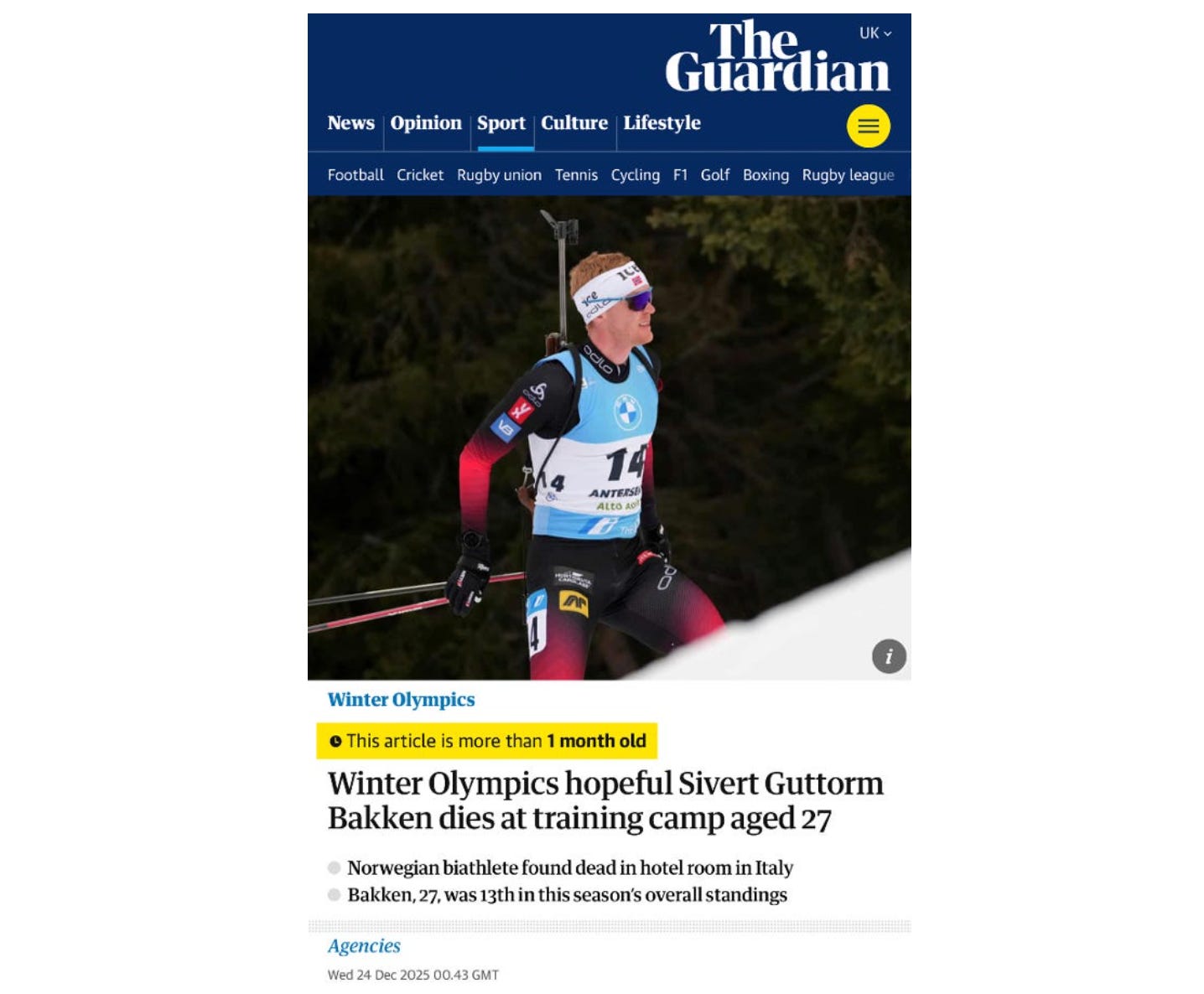
…I was interested to see how the story of the death of 27-year-old Norwegian biathlete Sivert Bakken was reported.
Here is the headline in The Guardian:
And here is the story on the BBC website:
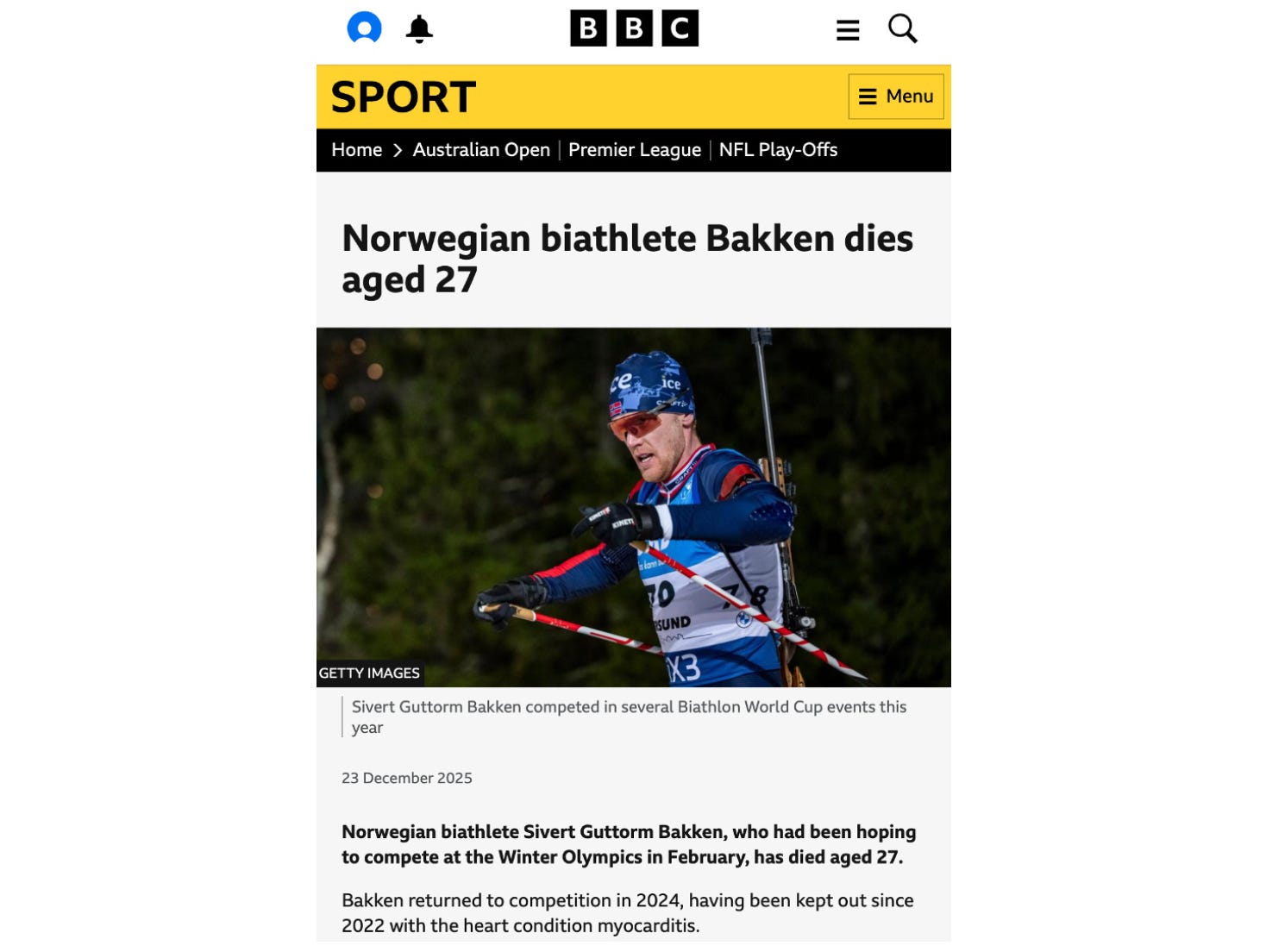
That second article states that…
Bakken returned to competition in 2024, having been kept out since 2022 with the heart condition myocarditis.
…but fails to mention any context in relation to covid vaccination such as that mentioned in this Eurosport article from 2022:
But according to the 24-year-old, things didn’t get any better. “I felt physically unwell and had pressure in my chest. It was very painful,” Bakken recalled of the time after the end of the last World Cup season.
Doctors diagnosed myocarditis, and Bakken has been sidelined since mid-May. Shortly after his mass start victory at Holmenkollen, which earned him the small crystal globe, Bakken received his third COVID-19 vaccination, the much-discussed “booster”.
According to Bakken, it was the trigger for his health complications. “It is almost 100 percent certain that my problems are due to the vaccination,” he said, adding: “I have heard of other cases where people had similar problems after vaccination.”
Make of that what you will.

Ambulance calls
Further to these posts…


…the latest UK government data (p19 here) for the most serious ambulance calls shows that the numbers rose substantially in mid-2021 and continue to remain high:
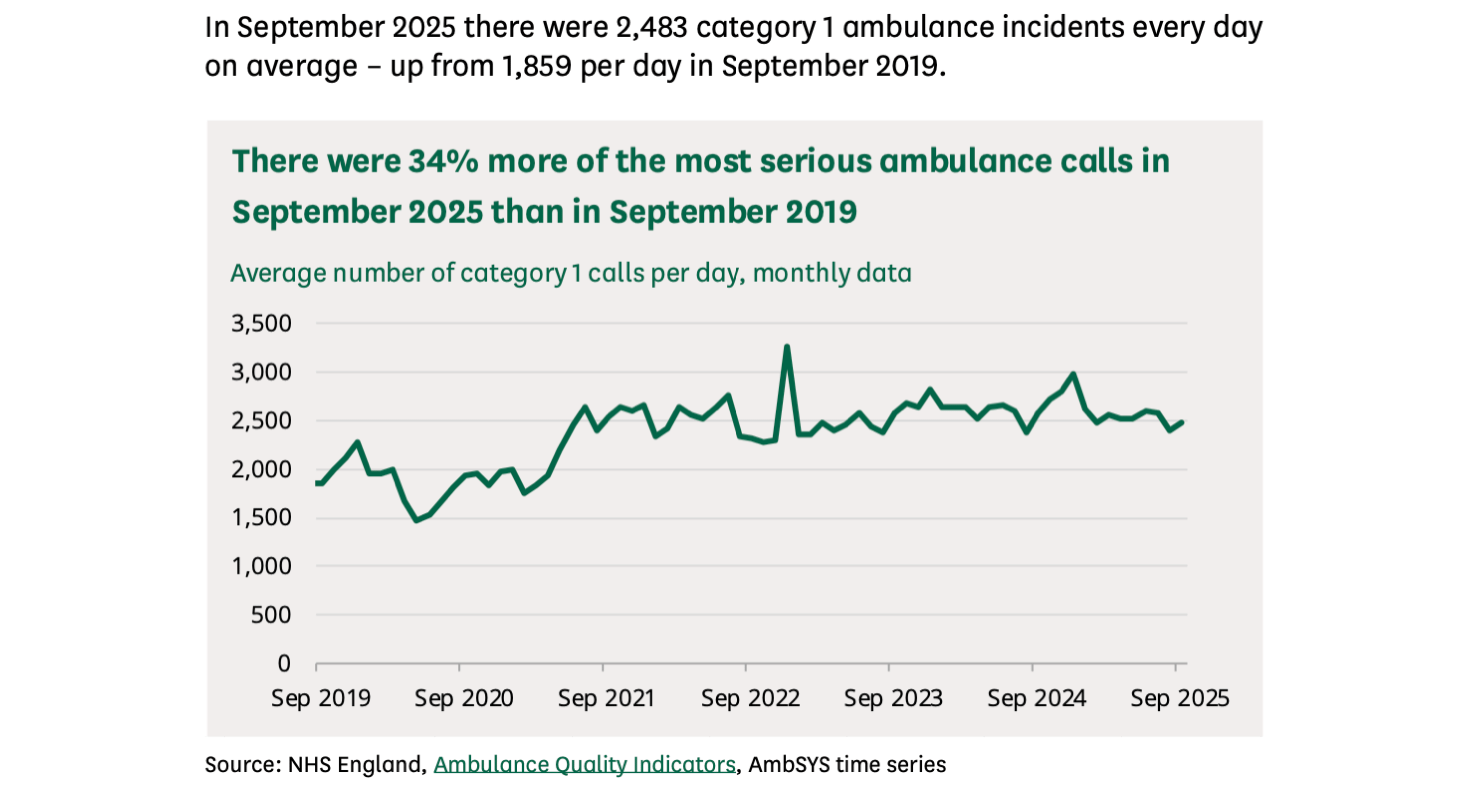
An extra 600 or so serious ambulance calls per day amounts to roughly 200,000 extra per year. Four serious ambulance calls instead of three.
The above data is consistent with e.g. these figures for Scottish mountain rescue callouts in 2021 and 2022:

Sex-selective abortion
Further to this post…

…I was shocked, although alas not entirely surprised, to see this headline:

Right To Life UK put out this statement:
A Mail on Sunday investigation… has revealed that a record number of baby girls are being aborted by parents living in Britain because they prefer boys.
Their probe shows that between 2021 and 2025, around 118 boys have been born to Indian mothers for every 100 girls, far higher than the national average of 105 boys born for every 100 girls.
In the financial year 2021/22, the birth ratio for third children born to Indian parents was 114:100, followed by a slight dip to 109:100 in the following year. It then rose dramatically in 2023/24 financial year to 118 boys compared to 100 girls, and stayed that way the following year.
The Government has said that sex-selective abortion is illegal – but at the same time, the UK’s largest abortion provider, BPAS, which receives the vast majority of its funding from the Government, is telling women on their website that sex-selective abortion is not illegal.
This is likely the tip of the iceberg when it comes to sex-selective abortions happening in the UK. Because many minority communities in the UK have relatively small numbers of births, even proportionally high numbers of female baby girls having their lives ended by sex-selective abortion would not show up as a statistically significant distortion in the birth ratios for these communities. So this data is very likely to underestimate the number of sex.
The Government must act without delay to cut all funding it provides to BPAS and urgently update legislation to introduce an explicit ban on sex-selective abortion.
The British Pregnancy Advisory Service website is also still recommending covid mRNA injections for pregnant women.
Talla context
Further to this recent post re Operation Talla…

…it is important to understand that, in the words of Ethical Approach Lead Investigator Ian Clayton:
Operation Talla did not create a new form of policing. It exposed an old one. We have seen it before.
At Hillsborough, policing prioritised narrative control over truth.
In grooming gang cases, reports were received, logged and quietly neutralised for years.
In both cases, the failure was not lack of evidence — it was institutional reluctance to act where consequences were politically or reputationally dangerous.
Cases of high-profile celebrities such as Jimmy Savile also spring to mind.
Operation Talla follows the same pattern. Not repression by force, but containment by process. Not refusal to receive allegations, but refusal to meaningfully investigate them. Not denial, but endless “assessment”.
This is policing by administration, not justice and that matters because the same techniques are ideally suited to managing future public resistance, for example, to digital ID, surveillance frameworks and spatial controls, without ever appearing authoritarian.
History shows us the risk. When policing protects state narrative rather than testing it, truth arrives decades later, after harm has done and accountability has faded away into the realms of distant memory.
Clayton concludes:
Operation Talla is not an anomaly, but a warning — a warning which too few are capable of fully appreciating.
Reputation
Not least in the context of this post…

…I was struck by this comment from Jeffrey Tucker of the Brownstone Institute:
Covid wiped out an entire generation of intellectuals, not in mortality but in reputation. Supposedly fearless scholars succumbed to the transparently absurd propaganda and became regime apologists. Now they all look ridiculous, with book sales dead and followers dispersed.
I don’t have any hard evidence in relation to book sales, but the general sentiment resonates with me. I am reminded of people I know who were educated at very reputable schools and universities, who have well-respected jobs, and in some cases distinguished titles. Yet, in Tucker’s words, they succumbed to the transparently absurd propaganda and became regime apologists. And now they don’t want to talk about it…
The short story featured in this post springs to mind:

After the event
Further to this post…

…I was wondering how live the House of Lords “livestream” actually is.
I asked AlterAI, which I featured here…

For the livestream of video from the House of Lords, are we seeing footage at the exact time it happens, or is there a delay? (50 words)
I got this response:
The livestream from the House of Lords isn’t truly instantaneous. Broadcasts typically include a short delay of 20–90 seconds for technical buffering and moderation, ensuring stable transmission and allowing brief emergency censorship if required. So, while effectively “live,” what you’re seeing happens slightly after the real event.
A woman who said No
Further to this inspiring post…

…I noted with interest this BBC article reporting that:
The head of a leading disability rights charity turned down an MBE in the New Year Honours over what she described as the “simply intolerable” situation facing disabled people in the UK.
Tressa Burke, chief executive of the Glasgow Disability Alliance, was recognised by the prime minister for her services to people with disabilities.
But in a letter to the Cabinet Office, posted on X, she condemned policy changes in November’s Budget…

Her post on X begins by expressing thanks for her proposed award and saying:
…regrettably, I must decline at this time as the situation for disabled people in the UK is simply intolerable.
I wonder what Ms Burke thinks of the assisted suicide bill, and how much she knows about how disabled people were treated during the covid era:

Defections to Reform
Further to this post…

…I noted with interest that, among a group of councillors recently defecting was none other than Reading councillor Clarence Mitchell, the former BBC journalist featured here in this post on the ongoing story of Madeleine McCann…

He now runs a PR consultancy business.
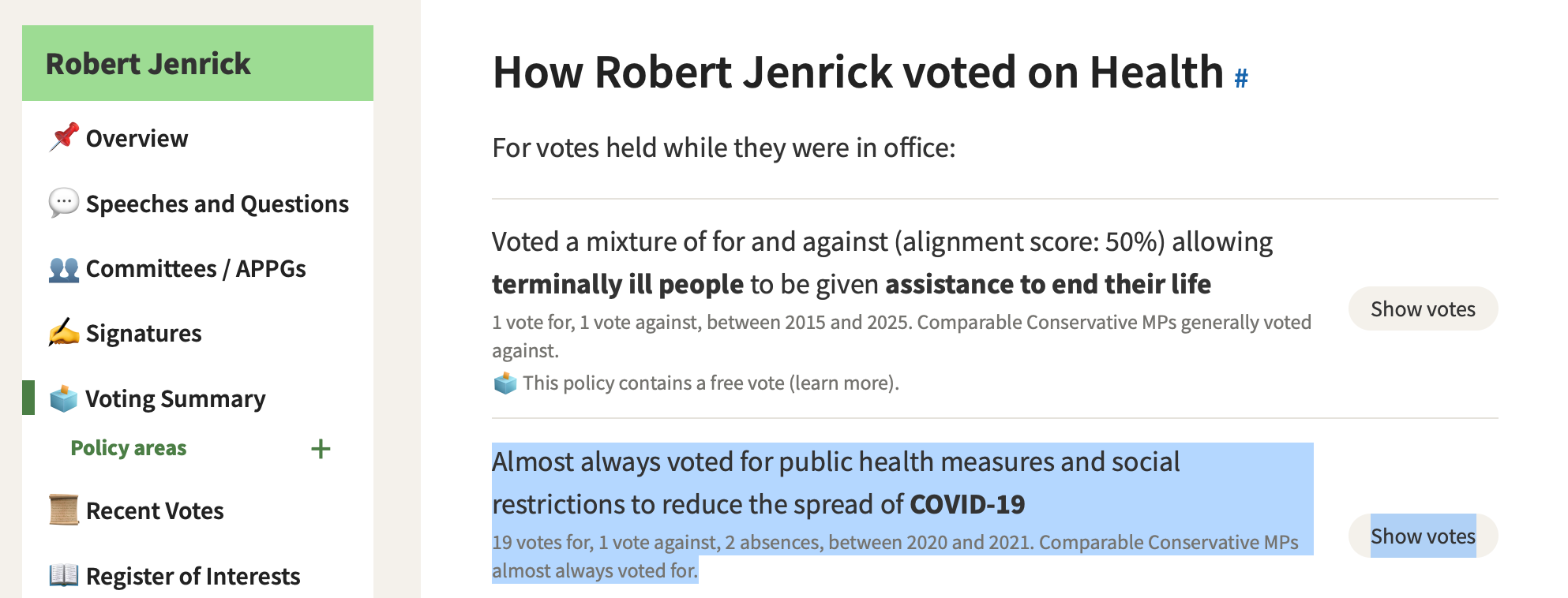
As to Robert Jenrick, a contender for the highest profile defector yet, his voting record can be found here at theyworkforyou.com:
Digital ID via children
Further to this post…

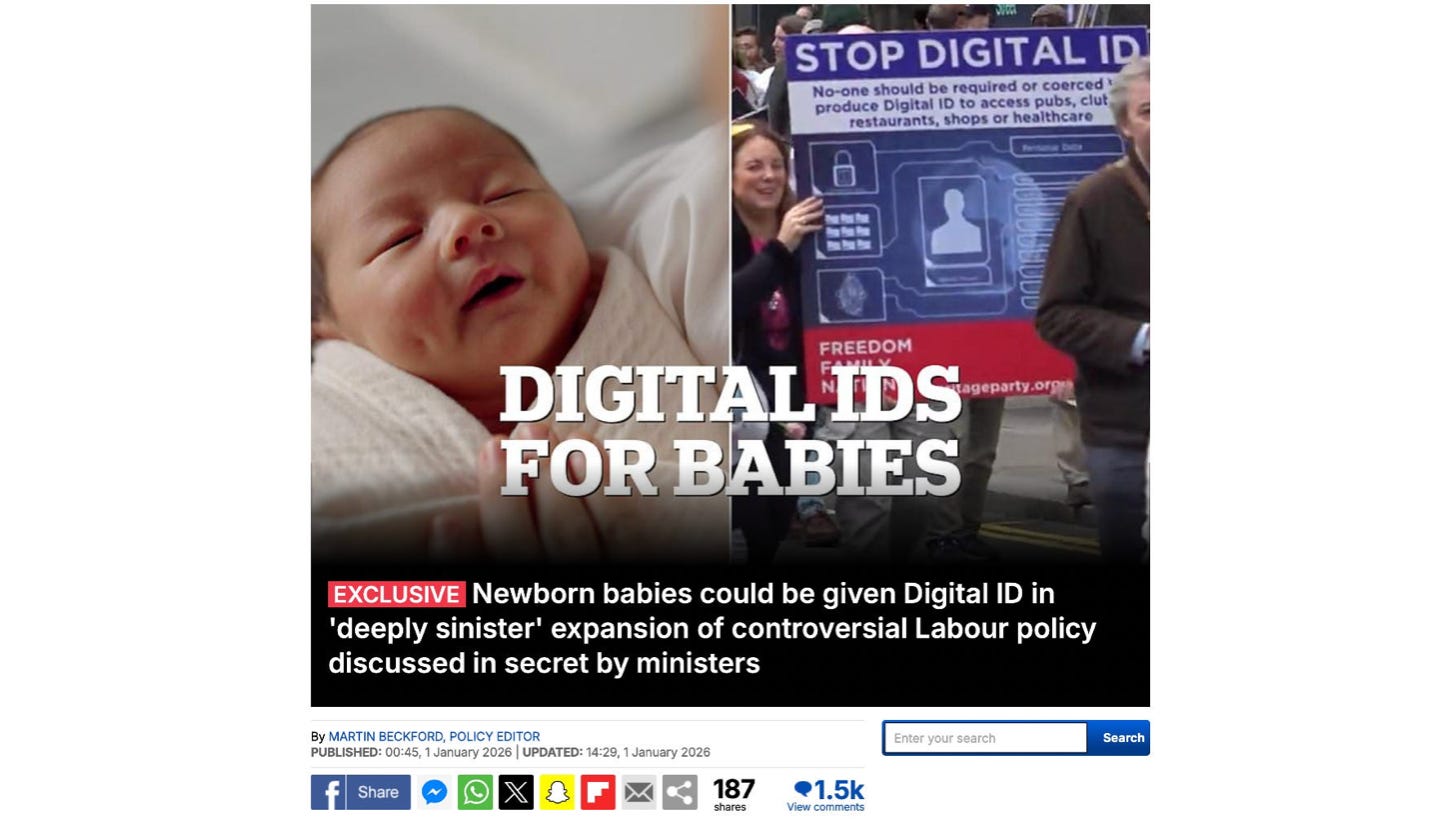
I noted this recent headline in the Daily Mail:
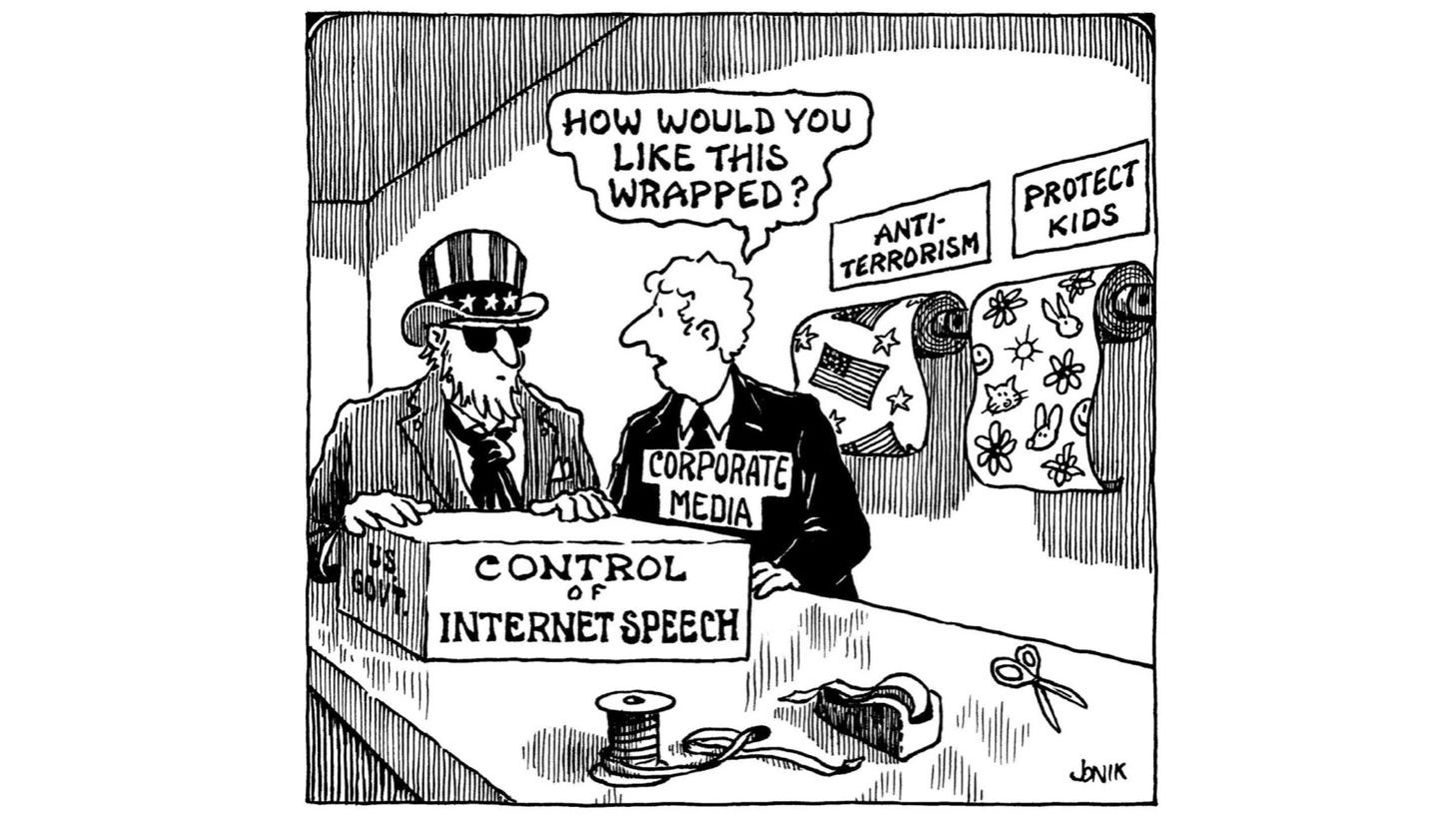
As to government plans to enforce a social media ban for under 16s, I am reminded of this cartoon:
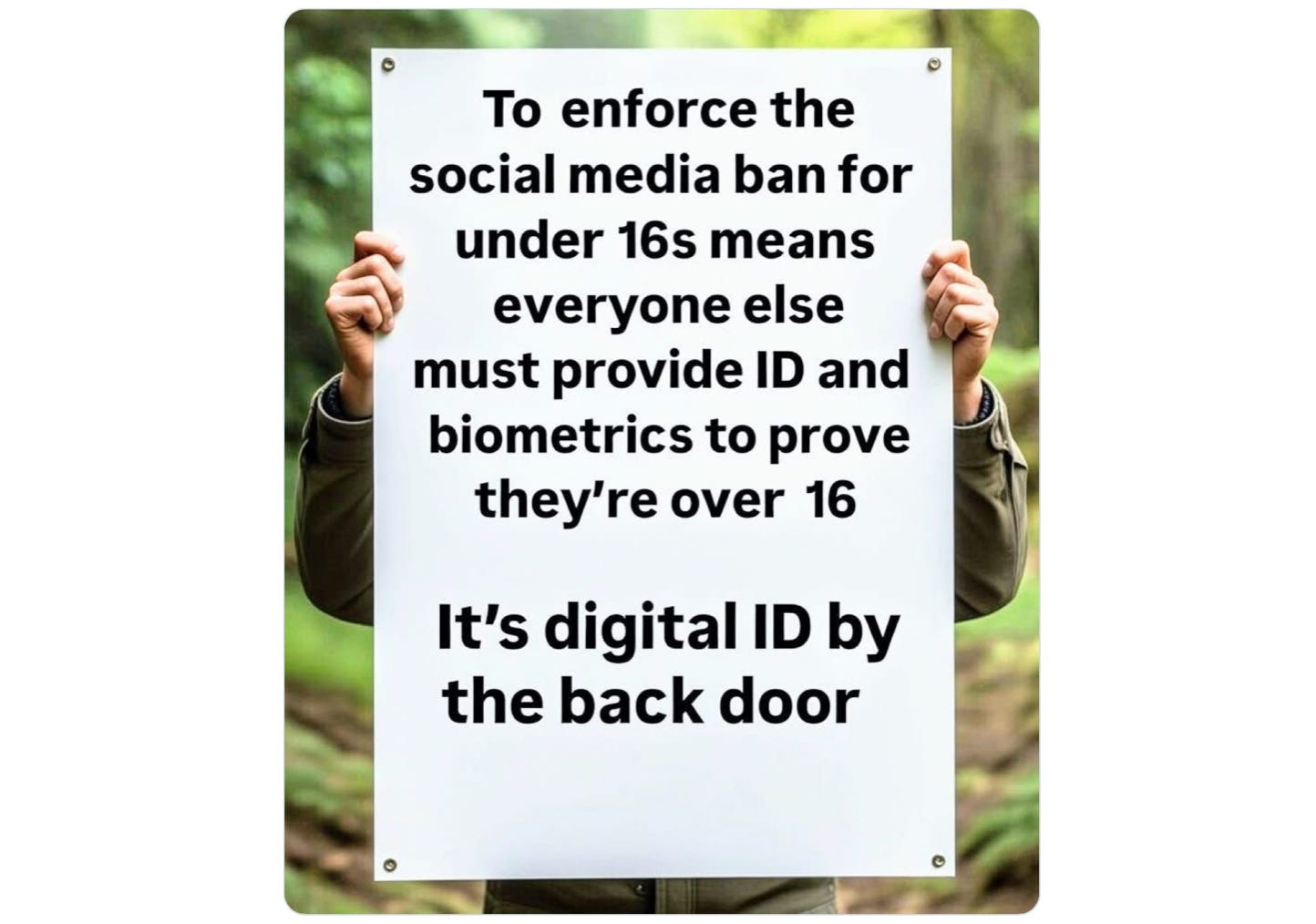
And this succinct summary:
For anyone wanting an easy way to write to their MP to oppose the social media ban for under 16s, I recommend this tool:
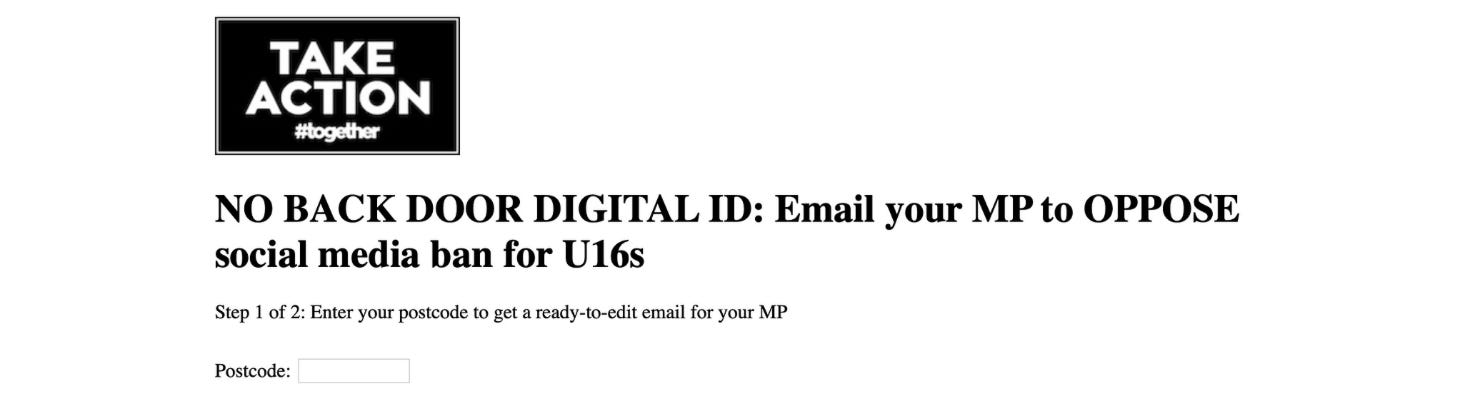
I have reproduced the template letter as a footnote below.1
Previous Updates posts
December: What will be the next “Talla”?; climate snippets; mask pushback; Spiked; “Superflu”; vax trial testimony; staying sceptical; can’t stop Christmas...
November: Vaccine harms; the persecution of Dr David Cartland; a global purge of independent leaders; the BBC and Ofcom; climate; a secret UK Cabinet Office meeting; Enoch Burke; NI Public Health Bill halted
October: Climate data deleted; folic acid in flour; Pizza Hut; digital ID film; vaccines; determinants of autism; growing awareness re covid protocols; Labour’s 1964 manifesto; technocrats; China and the WHO
September: Assisted suicide update; a Mitchell and Webb sketch; an announcement from Florida’s Surgeon General; vaccines as modern-day idols; Tommy Robinson as an imam?
Unexpected Turns homepage
The most-read articles can be found here
I am writing as a constituent to urge you to oppose any proposal to ban under-16s from social media. Were you aware that 42 children’s and online safety organisations, experts and bereaved families - including the NSPCC - have issued a joint statement saying even they do not support this proposal?
This policy would be a serious mistake - undermining parental responsibility, civil liberties, child safety, and democratic accountability, while being entirely unworkable in practice.
First, this is a decision for parents, not the state. Families are best placed to decide what is appropriate for their children, based on maturity, circumstance and individual needs. A blanket ban replaces parental judgement with state control.
Second, such a ban would likely require de facto compulsory digital ID. Enforcing age verification at scale means forcing every citizen to prove their identity to access basic online services. The British public has overwhelmingly rejected digital ID proposals, yet this would introduce it through the back door. Anonymity protects whistleblowers, vulnerable people and political dissenters alike, and this would destroy it.
Third, social media is beneficial for many children. For millions of young people online platforms provide vital spaces for connection, self-identity, friendships, peer support and access to trusted advice and help. Removing these spaces risks isolating and making miserable the very children who most need them.
Banning children from social media risks an array of unintended consequences. It would create a false sense of safety that would simply push children into darker, unregulated corners of the internet where they are harder to protect.
It would also be unworkable. Teenagers will inevitably find workarounds through VPNs, foreign platforms and fake credentials - pushing them further beyond safeguarding and parental oversight.
Worse still, such a system would hand the state powerful new tools to monitor and control online speech. Once identity verification is embedded into everyday communication, it becomes trivially easy to suppress dissent, journalism, and democratic scrutiny. This is not a power any government should be given.
I urge you to stand up for parental responsibility, child safety, civil liberties and democratic accountability by opposing any form of social media ban for under-16s and any system of de facto compulsory digital ID.